


THE CHELSEA TIMELINE
1880
Chelsea's initial roots were unsteady, with its name changing from "Harvard" to "Boston" then "Eastman" Clock before finally settling as the Chelsea Clock Company.
1884
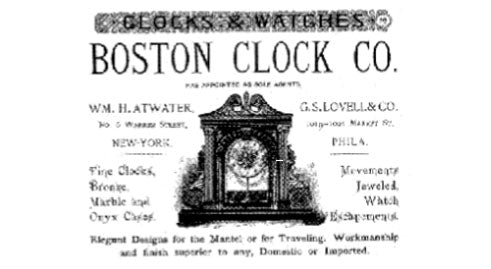
Original Advertisement from Boston Clock Company.
1899
First Chelsea Clock customer contracts signed with U.S. Navy, U.S. Army, and Tiffany & Co.
1900
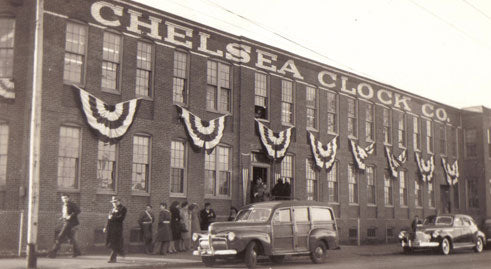
Chelsea brand gains recognition as innovative clock designs are patented and introduced, relationships with distributors are formed, and marketing via print advertisements and catalogs is established. By 1905, Chelsea established distribution across the United States.
1900
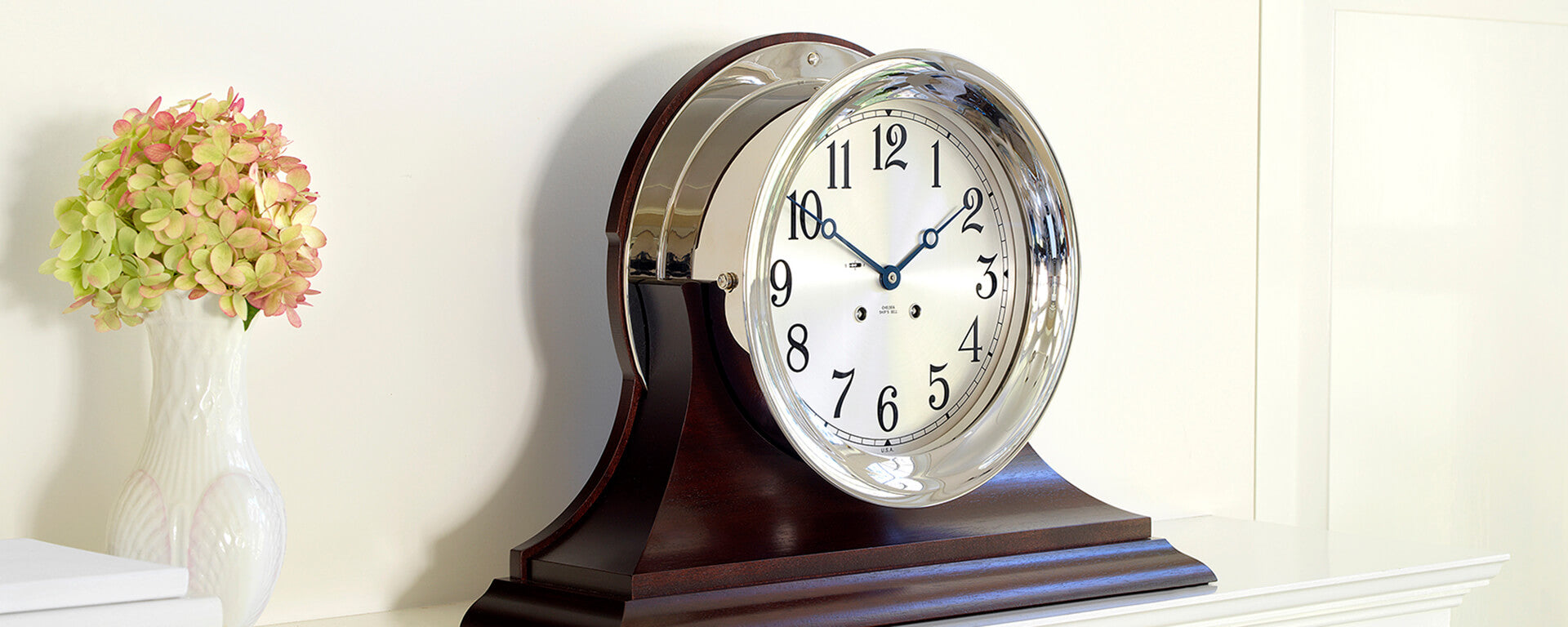
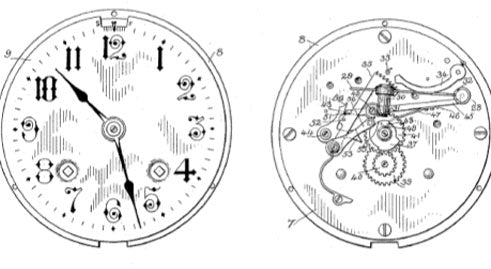
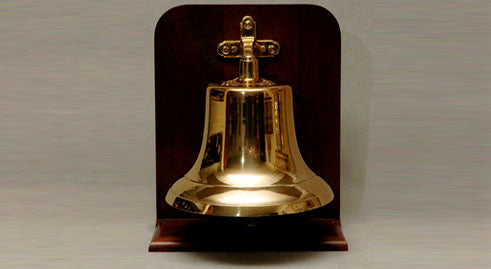
First Chelsea Clock Ship's Bell mechanism is designed and patented.
1900
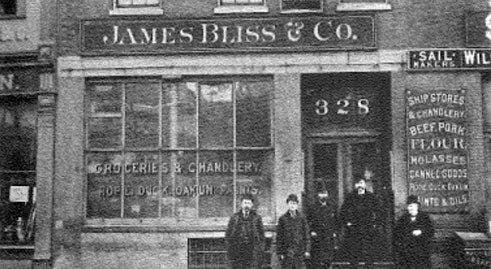
Early retail partner channel established with James Bliss & Company in Boston.
Early 1900s
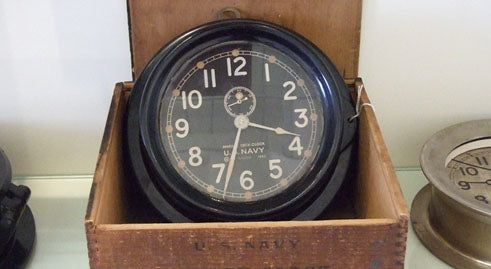
Different U.S. government agencies, including the U.S. Naval Observatory in Washington D.C., order marine clocks and chronometers, making Chelsea Clock a standard for measuring time in the United States.
1902
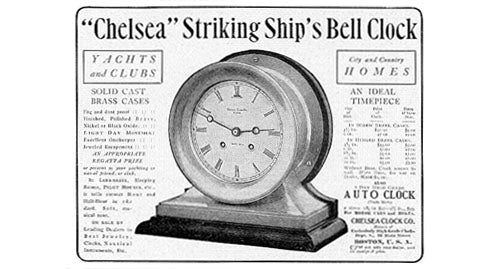
Ad in Country Life promoting the Ship's Bell.
1903
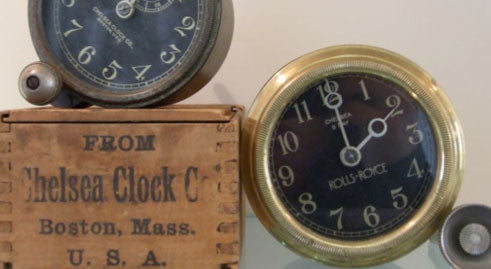
Automobile clock production begins for dashboard instrumentation of Rolls Royce vehicles, and later Ford Motor Company automobiles.
1906
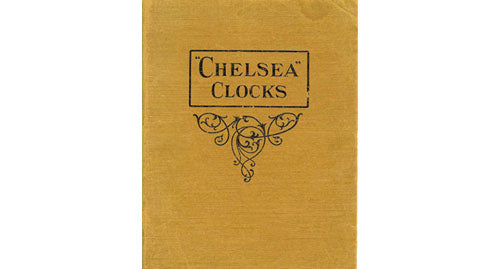
Chelsea Clock Company publishes the earliest known catalog.
1910
Chelsea Clock continues to receive orders from U.S. Government Agencies for marine clocks in increasing quantities - as a result Boston Clock was formed (a separate brand for clocks the company manufactured to meet government standards).
1911
Walter Menns patents the Chelsea Automatic Ship's Bell Clock.
1914
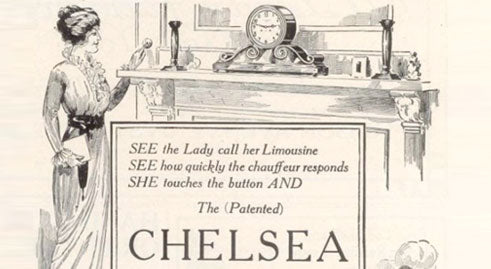
Advertisement featuring a Ship's Bell along with candle sticks.
1917
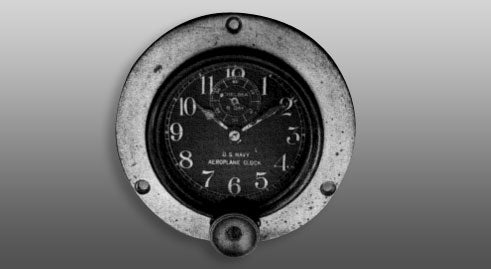
The popular automobile clock was modified for airplane installation.
1920
As the country enjoyed a period of growth and prosperity, consumers continued to buy clocks as household necessities. By 1929, competition for clock manufacturing was aggressive - an estimated 56 companies engaged in the manufacturing of clocks and clock movements, an increase of 50% compared to prior decade.
1920
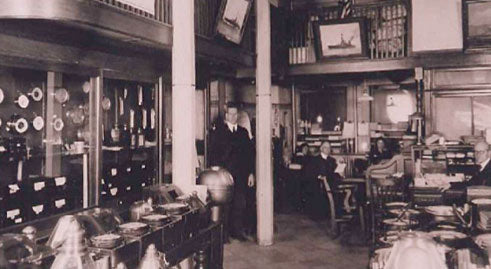
One of Chelsea Clock's Oldest Dealers. Wilfred O. White, seated at desk.
1922
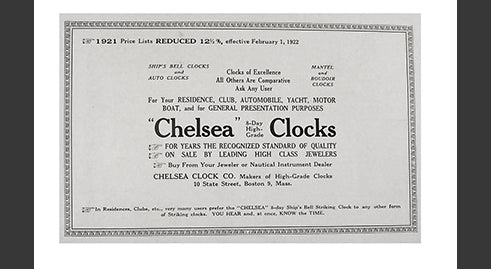
Early Chelsea Price Notice advertising 12½ discount off of Clocks.
1930
Drastic inventory and cost reductions were made in the face of dire economic conditions resulting from the Great Depression, which enabled Chelsea to remain viable while many competitors were forced into bankruptcy.
1930
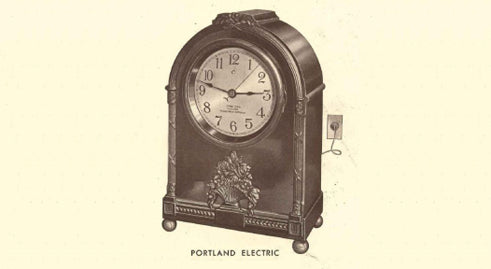
Electric clocks are produced to satisfy growing customer demand.
1934
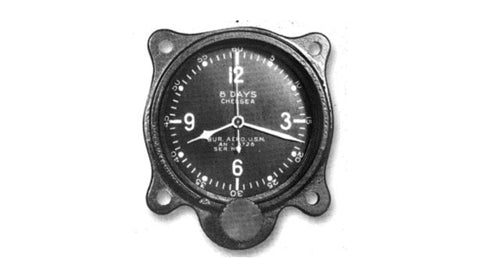
Airplane Clock, produced for the U.S. Navy in 1934.
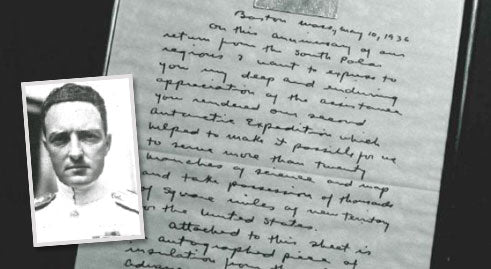
1936
Thank you from Admiral Byrd for clocks used on South Pole expedition.
1940
During World War II Chelsea lives up to its reputation as "Timekeeper of the Sea," producing more in four years than entire production since 1897. At this time, Chelsea was singularly focused on furnishing thousands of clocks to the armed forces for use aboard Liberty ships, submarines, destroyers, cruisers, battleships and aircraft carriers.
1940
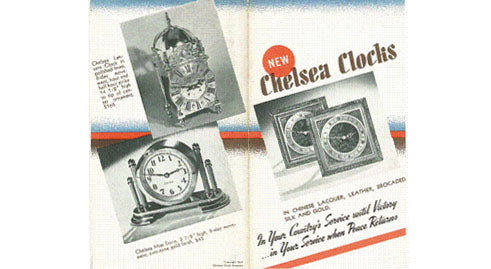
Wartime catalog highlights military clocks made during the war.
1940
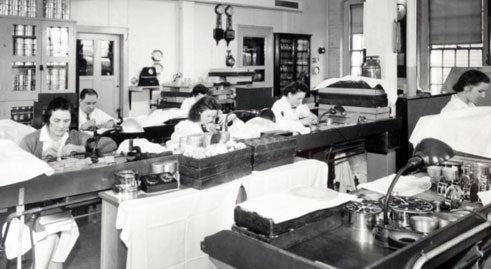
During the World War II era, women became the driving force behind Chelsea Clock's workforce and production, stepping into critical manufacturing roles left vacant by enlisted men, ensuring the company could meet heightened demand for precision timepieces essential to military operations.
1943
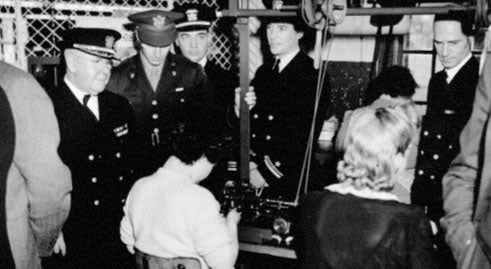
The Army-Navy "E" Award, presented by the U.S. government, recognized Chelsea Clock's designation as a critical supplier and its outstanding excellence and efficiency in producing essential materials for the wartime effort.
1948
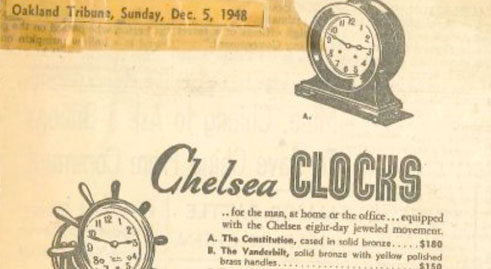
Newspaper ad placed in the Oakland tribune, featuring Chelsea.
1950
1953
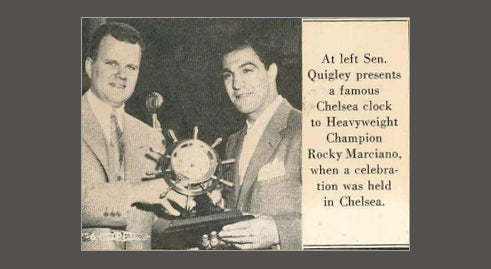
A Chelsea Mariner clock is presented to Boxing Champion Rocky Marciano.
1956
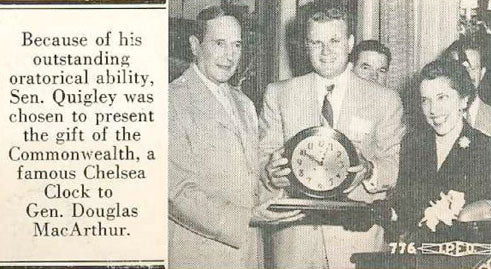
A Chelsea clock presented to WWII military commander, General Douglas MacArthur.
1957
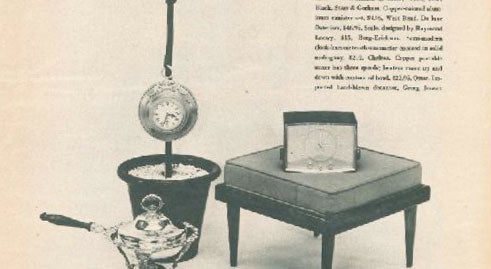
Ad in Esquire featuring Chelsea alongside other luxury housewares.
1960
1960
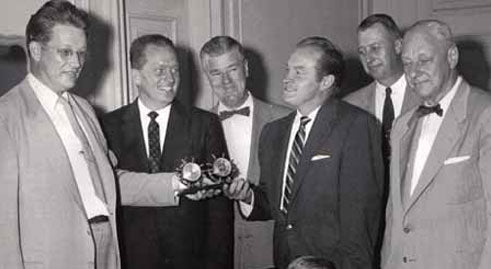
Bob Hope accepts a Chelsea award for his humanitarian efforts.
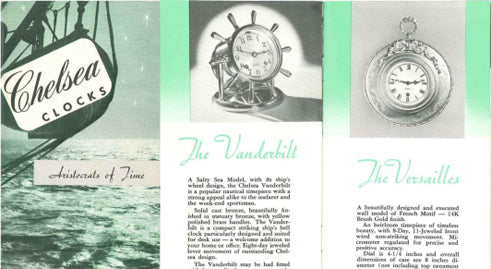
1961
Branding evolved from Timekeepers of the Sea to Aristocrats of Time
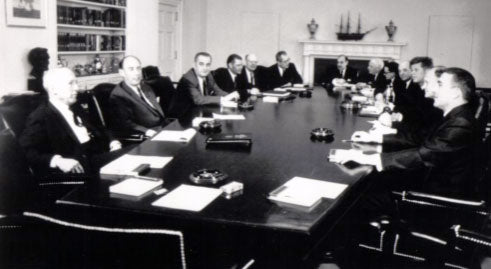
Early 1960s
Kennedy administration meeting with a Claremont clock on the shelves.
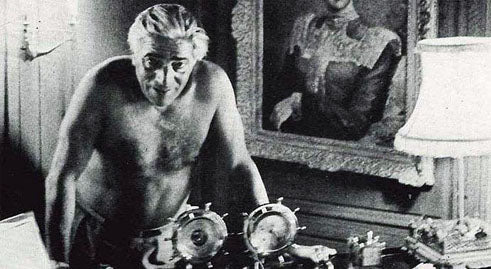
Early 1960s
Aristotle Onassis with his Chelsea Claremont clock.
1964
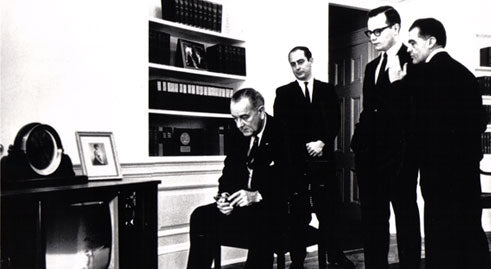
President Lyndon Johnson watches a NASA liftoff, along with a Chelsea.
1970
1972
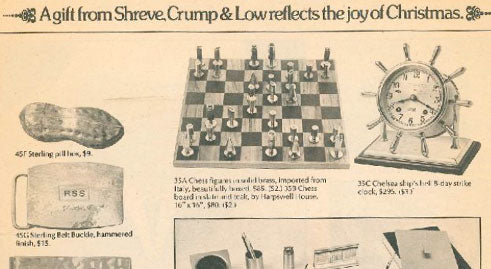
Chelsea in a holiday ad from dealer Shreve Crump & Low.
1975
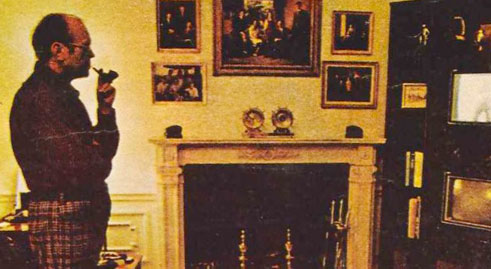
President Ford in his study, where a Chelsea clock rests on the mantel.
1975
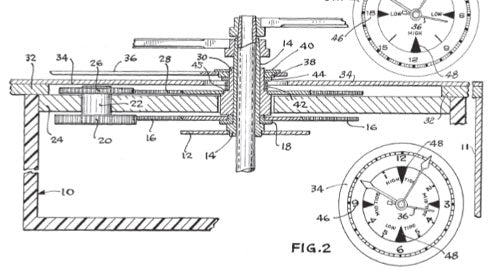
Chelsea is granted a patent for the Tide Clock mechanism.
1979
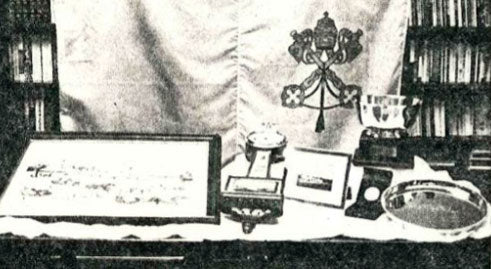
A Chelsea clock is gifted to Pope John Paul II during his visit to Boston.
1980
1980s
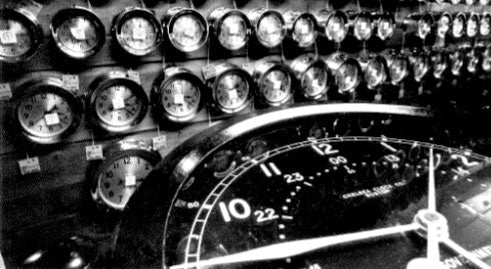
Production room with clocks on test at Chelsea Clock's factory.
1982
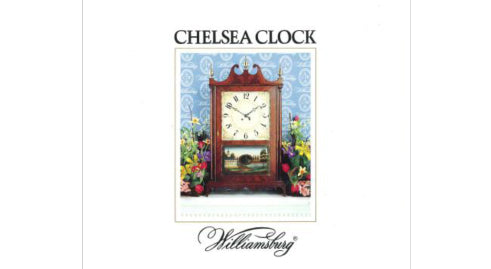
Reproduction of the Terry clock as part of Williamsburg Series.
1986
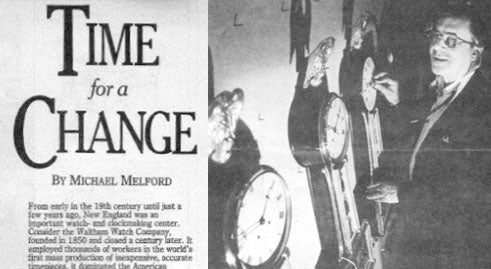
Boston Globe features Chelsea's 100 yr old approach to clock making.
1990
1997
Chelsea celebrates 100 years and introduces the Centennial Clock.

1997
Limited-edition clocks made to commemorate the USS Constitution.
2000
2006
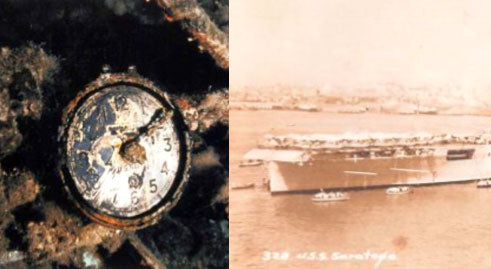
Chelsea mechanical clock found aboard the wreck of USS Saratoga (CV-3), a pioneering Lexington-class aircraft carrier commissioned in 1927. The ship was known for its extensive WWII service, including the battle of Iwo Jima, where it sustained heavy damage. The ship was sunk as a target in 1946 during Operation Crossroads atomic tests, and her wreck remains a popular, accessible dive site at Bikini Atoll.
2009
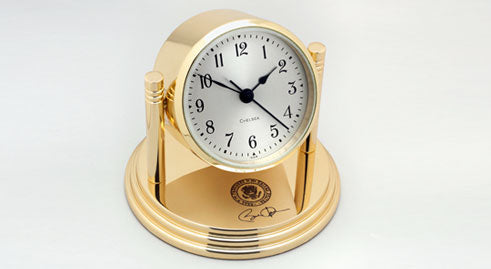
President Obama selects the Dartmouth clock to gift dignitaries while abroad.
2010
2012
President Bush presents a Chelsea clock to Turkey’s president Ahmet Necdet Sezer.
2015
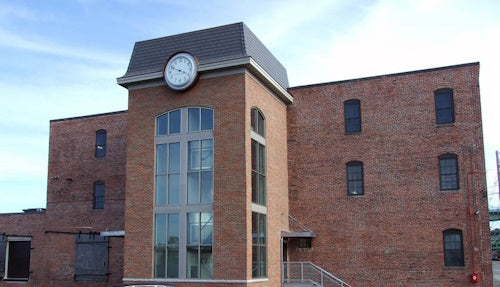
Chelsea moved into a new, upgraded factory building.
2020
2021
American History and Chelsea Clock Featured in White House History Quarterly.
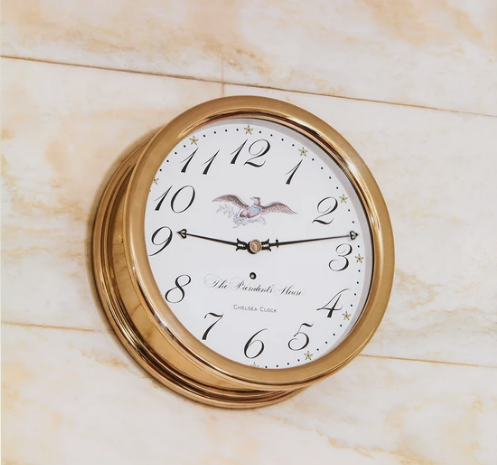
In keeping with Chelsea Clock’s long presidential history, the prestigious journal White House History Quarterly featured Chelsea Clock. The theme of the issue is “As Time Goes By: Historic Moments in The Life of The White House.” One of our instantly recognizable clocks is prominently displayed on the cover. This clock was custom made for the White House. Chelsea craftsmen worked closely with White House designers to create this special clock to hang above the entrance to the First Family’s living quarters.